
Sticking to a single workout modality often produces early milestones, but repeating identical movement patterns day after day inevitably leads to plateaued performance, muscular imbalances, and persistent joint wear. Whether your regular regimen centers on distance running, heavy powerlifting, or high-intensity interval drills, relying entirely on one discipline limits physical potential and increases vulnerability to repetitive strain. Integrating versatile fitness programs through structured cross-training solves this fundamental challenge by pairing complementary movement patterns, diverse energy systems, and active joint deloading into a cohesive lifestyle system.
At its core, cross-training combines two or more distinct exercise disciplines—such as uniting high-resistance strength work, cardiovascular conditioning, low-impact aquatic laps, and targeted mobility drills—to build well-rounded athleticism. Clinical research highlighted by the American Council on Exercise (ACE) and Harvard Health Publishing demonstrates that multi-modality conditioning builds balanced structural resilience, accelerates cardiovascular recovery, and keeps motivation consistently high. At Team85 Fitness & Wellness, members discover firsthand how shifting from rigid single-discipline training to balanced, whole-body cross-training unlocks sustainable, long-term health improvements.
Key Cross-Training Benefits for Long-Term Physical Health
Understanding the functional benefits of cross-training enables athletes and everyday fitness enthusiasts alike to design routines that support continuous progression without overloading vulnerable connective tissues. The primary advantages include:
- Comprehensive Injury Prevention: Single-discipline regimens subject identical tendons, joints, and ligaments to cumulative micro-trauma. As documented by the Mayo Clinic on overuse injury prevention, alternating high-impact sessions with low-impact modalities—such as indoor cycling or swimming in an aquatic fitness center—spares cartilage while sustaining aerobic output.
- Breaking Plateaus Through Muscle Confusion: The human body rapidly adapts to repetitive demands, burning fewer calories and yielding diminishing muscular gains over time. Introducing dynamic movement planes, rotational exercises, and varying resistance stimuli forces neuromuscular adaptation and reactivates stalled metabolic progress.
- Postural Alignment and Muscular Balance: Running predominantly trains the sagittal plane and anterior lower body, while bench pressing primarily loads the chest and front deltoids. Combining targeted resistance training with functional mobility strengthens underdeveloped posterior chains and stabilizes core muscle groups.
- Psychological Refreshment via Workout Variety: Mental burnout and routine monotony represent leading causes of gym dropouts. Maintaining rich workout variety—moving between energizing group spin sessions, barbell circuits, and restorative stretch flows—keeps enthusiasm sharp and drives consistent session adherence.
- Enhanced Cardiorespiratory Efficiency: Pairing sustained aerobic sessions with anaerobic threshold training strengthens cardiac stroke volume, expands lung capacity, and accelerates lactate clearance across everyday physical tasks.
Core Disciplines That Power Versatile Fitness Programs
A well-rounded cross-training blueprint blends complementary disciplines that target distinct physiological adaptations. Rather than exhausting the same energy pathways repeatedly, structured programs alternate between the following four pillars:
- Functional Strength and Hypertrophy Training: Utilizing free weights, kettlebells, and resistance machines preserves bone mineral density, boosts resting metabolic rate, and reinforces connective tissues. Learn more about balancing resistance loads in our guide to strength training versus cardio programming.
- Low-Impact Cardiovascular Conditioning: Disciplines such as lap swimming, rowing, and dedicated indoor cycle classes challenge the heart and lungs at high heart rate zones while delivering minimal joint-shearing forces.
- High-Energy Group Interval Training: Dynamic bootcamps and instructor-led group fitness classes combine calisthenics, plyometrics, and functional turf drills to build athletic agility, reaction speed, and functional stamina.
- Flexibility, Core Stability, and Active Recovery: Incorporating mindful yoga, dynamic stretching, and dedicated workout recovery protocols or therapeutic cold plunge recovery sessions restores tissue elasticity and mitigates delayed-onset muscle soreness (DOMS).
Single-Discipline Training vs. Multi-Modality Cross-Training
To visualize why versatile cross-training produces superior overall conditioning, compare how an isolated routine stacks up against a multi-modality regimen:
| Performance Metric | Single-Discipline Focus (e.g., Running Only) | Structured Cross-Training (Team85 Model) |
| Overuse Injury Risk | High; concentrated impact causes tendonitis and joint wear. | Low; alternating modalities spread structural loading evenly. |
| Muscular Symmetry | Uneven; creates dominant prime movers and weak stabilizers. | Balanced; engages opposing muscle groups and functional stabilizers. |
| Metabolic Conditioning | Narrow; trains either purely aerobic or purely anaerobic systems. | Holistic; activates aerobic, glycolytic, and phosphagen pathways. |
| Mental Engagement | Prone to monotony, motivation slumps, and exercise burnout. | High; varied daily workouts maintain enthusiasm and focus. |
| Recovery & Longevity | Prolonged fatigue due to repetitive joint and muscle strain. | Accelerated recovery supported by active low-impact flushing. |
Sample Weekly Blueprint for Sustainable Cross-Training
Building an effective routine does not require endless hours in the gym. Follow this proven 7-day schedule designed by certified trainers at Team85 Personal Training to optimize cardiovascular performance and muscle tone without overtraining:
- Monday (Lower Body Strength & Core): Squats, lunges, deadlifts, and functional core stabilization exercises to establish a strong structural foundation.
- Tuesday (Low-Impact Aerobic Flush): 45 minutes of indoor cycling or lap swimming to elevate heart rate while allowing lower-body joints to decompress.
- Wednesday (Upper Body Resistance & Postural Pulls): Horizontal and vertical pulling movements, overhead presses, and rotator cuff stability to counteract desk fatigue.
- Thursday (Restorative Mobility & Gentle Yoga): Active recovery focusing on hip opening, thoracic spine mobility, and gentle breathwork.
- Friday (Full-Body Conditioning or Turf Drills): Kettlebell swings, battle ropes, and functional turf sprints for high-intensity metabolic stimulation.
- Saturday (Recreational Cardio / Group Class): Engage in a social group fitness class, outdoor jog, or recreational court sports.
- Sunday (Full Rest & Deload): Complete passive rest, hydration, and nutritional replenishment to prepare for the upcoming training week.
Serving Homeowners Across Burlington, Mercer, Monmouth, and Bucks County
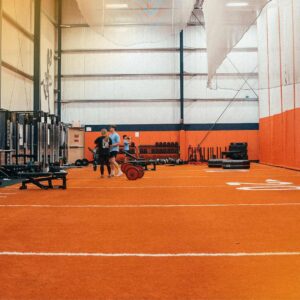
Situated centrally in historic Bordentown, New Jersey, Team85 Fitness & Wellness serves homeowners and active families across Burlington, Mercer, and Monmouth Counties, as well as neighboring Bucks County, Pennsylvania across the Delaware River. Living in the Mid-Atlantic means experiencing dramatic seasonal weather swings—from humid summer heatwaves that restrict outdoor runs to freezing, icy winter stretches that increase slips and joint stiffness. Local property owners face strenuous seasonal yard upkeep, home maintenance, and demanding commutes that require functional, pain-free physical stamina. Team85’s premier 100,000+ square foot all-weather sports complex and fitness center provides climate-controlled Olympic lap pools, indoor turf fields, basketball courts, and comprehensive weight floors. This expansive, multi-disciplinary facility ensures area residents maintain versatile, injury-free cross-training year-round, shielded from unpredictable Mid-Atlantic elements.
Frequently Asked Questions About Cross-Training Benefits
1. What is cross-training, and how does it accelerate fitness progress?
Cross-training is an athletic programming strategy that incorporates multiple exercise disciplines—such as strength training, cycling, swimming, and mobility work—into a single fitness regimen. By exposing muscles to varied training angles and alternating between aerobic and anaerobic energy systems, cross-training prevents physical plateaus and stimulates well-rounded conditioning. Explore our dynamic group fitness class options to experience structured multi-discipline programming.
2. How do versatile fitness programs help with injury prevention?
Repeating identical movement arcs generates chronic stress on localized joints and connective tissues, frequently resulting in patellar tendonitis, plantar fasciitis, or rotator cuff impingement. According to clinical data published by the Mayo Clinic, cross-training distributes physical stress across diverse muscle groups and integrates joint-friendly recovery modalities, drastically reducing chronic overuse injuries.
3. What are the specific cross-training benefits for runners and endurance athletes?
Endurance runners frequently develop tight hip flexors and muscular imbalances due to linear, repetitive impacts. Adding functional resistance training strengthens glute stabilizers and hamstrings, while substituting one or two weekly runs with low-impact cycle classes preserves high cardiovascular threshold without subjecting knees and ankles to repetitive ground impact forces.
4. How often should I cross-train each week for optimal results?
Most healthy adults thrive on three to five cross-training sessions per week. A balanced schedule commonly features two strength sessions, two cardiovascular or aquatic workouts, and one dedicated flexibility or active recovery day. Certified coaches from the National Academy of Sports Medicine (NASM) recommend leaving at least one to two days for systemic rest and tissue repair.
5. Can cross-training break through weight loss and metabolic plateaus?
Yes. Neuromuscular adaptation causes the metabolism to burn fewer calories when repeating identical daily workouts. Shifting between high-intensity resistance circuits, aerobic intervals, and functional turf workouts continuously shocks the metabolic rate, stimulating higher excess post-exercise oxygen consumption (EPOC) and sustained fat loss. Read our comparative analysis on strength training vs. cardio for fat loss to optimize your metabolic balance.
6. What is the fundamental difference between cross-training and functional fitness?
Functional fitness prioritizes movement patterns that mimic everyday activities (such as lifting, squatting, carrying, and twisting) to improve daily physical capability. Cross-training represents a broader overarching training philosophy that combines completely different sports and exercise modalities (such as swimming, weightlifting, and running) to build all-around athletic conditioning.
7. Why is workout variety crucial for long-term exercise adherence?
Exercise monotony is a primary cause of training fatigue and gym dropouts. Rotating disciplines keeps workouts mentally engaging, challenges coordination, and introduces social variety—such as participating in community workouts or studio classes. Guidelines from Harvard Health emphasize that workout variety directly reinforces long-term adherence and cognitive wellness.
8. Can beginners safely engage in a cross-training program?
Absolutely. Cross-training is exceptionally beginner-friendly because it prevents novice lifters from overworking unconditioned joints. Beginners can start by pairing moderate bodyweight resistance training with low-impact swimming or walking. Working with certified experts through Team85 personal training programs ensures proper biomechanical form and gradual progression.